Home Blog

How to Compete With iBuyers: Top 10 Takeaways From Our Latest Webinar

According to Zillow’s latest iBuyer report, homeowners sold 27,244 homes worth a total of $10.6 billion via an iBuying service in Q3 2021.

This report analyzed four of the largest iBuyers at the time (RIP Zillow Offers) and showed that iBuyer market share nearly doubled from the previous quarter.

Another interesting tidbit from Zillow’s report is the fact that iBuyers paid more for homes in Q3 than in any previous quarter. The median sale price paid by iBuyers in Q3 was $376,000—13.9% more than the median U.S. sale price of $329,970.

When iBuyers are willing to pay prices that small-time investors simply can’t match if they have any hope of pulling a profit, what can a local investor do to compete with iBuyers in 2022 and beyond?

That’s one of the questions we answered in our latest webinar for LeadPropeller members. For the top 10 takeaways from this free real estate investor training, read on.

1. What’s the Difference Between an iBuyer and a Private Investor?

There are plenty of differences between iBuyers and private investors. In this short video, we outline what the primary differences are and why these two groups have two very different approaches to property acquisition.

2. Why 2/3 of Zillow’s Acquisitions Sell at a Loss

You’ve probably heard about Zillow Offers shutting down, but did you know that Zillow is now selling the majority of their properties at a loss? In the video below, we explain why.

3. When Will iBuyers Exit the Market?

Zillow already pulled out of the market, but what about Offerpad and Opendoor? Watch this video and find out when we might to see other iBuyers make their exit.

4. How Investors Can Compete With iBuyers

As a local investor with limited capital, what can you do to compete with companies like Offerpad and Opendoor? Here, we describe what the average investor needs in order to win deals in 2022 and beyond.

5. How Large of a Net to Cast When Fishing for Seller Leads

How many homeowners can you effectively target without breaking the bank? In this video, we share the targeting strategies our top users have employed to generate low-cost, high-converting leads.

6. How to Leverage Local Celebrity Status to Land Deals

A few simple tweaks to your website will make it so much easier to convert motivated seller leads. Watch the video below and discover why adding a little personality to your site has such a big impact on conversion.

7. How to Build Trust With a Seller in Just 8 Seconds

Homeowners want to work with someone they like, know, and trust. Discover what you can do to build rapport with sellers in eight seconds or less by watching the video below.

8. How to Stay Top of Mind With a Flawless Follow-Up System

LeadPropeller’s integrated autoresponder makes it easy to follow up with motivated seller leads from the second they contact you. But what’s the best way to configure it for flawless follow-up? Watch this video and find out.

9. Viewer Question: How Can You Make a Website Work Better for You?

One viewer wanted to know what we suggest for making a real estate investor website work better for lead generation and conversion. Below, we share a few strategies that our top users have proven to be highly effective.

10. Viewer Question: How Can You Drive Traffic to Your Website?

Every website owner wants to know the answer to one specific question: How can you drive traffic to your website? In this video, we share the only SEO strategy that will drastically increase website traffic in no time flat.

Watch Our Full Webinar on Competing With iBuyers

While Zillow Offers may be no more, the iBuyer phenomenon is likely here to stay. If you want to compete with HUGE companies like Opendoor and Offerpad, you must leverage the advantages you have as a local investor.

To learn what these advantages are and what you can do beat iBuyers in 2022 and beyond, watch the full webinar for free right here. To catch our next live webinar and stay up to date with everything LeadPropeller and local-investor related, subscribe to LeadPropeller on YouTube.


How to Use Your Real Estate CRM with LeadPropeller

Do you have a beautiful LeadPropeller website that’s bringing in boatloads of high-quality seller leads? Do you also have a favorite real estate CRM that would be perfect for managing these leads—if there was a way to automatically, instantly import them?

Good news: There is an easy way to connect your LeadPropeller website to the CRM of your choosing.

In this post, we’ll explain (in simple terms) how to ensure form submissions are seamlessly sent to your CRM via LeadPropeller’s new webhook integration.

Already have a real estate CRM? No problem!

As your LeadPropeller website brings in more and more leads, you’ll want need a system in place for flawless follow-up; that’s where your CRM comes in.

And if you already have a CRM set up, you won’t want to start over with a new one.

Thanks to webhooks, you don’t have to!

What is a webhook?

So, what is a webhook?

As defined by Twilio‘s David Prothero, “Webhooks are user-defined HTTP callbacks. They are triggered by some event in a web application and can facilitate integrating different applications or third-party APIs.”

For our purposes, let’s just say that a webhook is a tool you can use to automatically send new leads to your favorite CRM service.

With webhook integration, we give members the ability to continue using the CRM that works best for them. In other words, you can use Podio, Salesforce, Forefront, or something else entirely with your LeadPropeller site; it’s all up to you.

At LeadPropeller, we don’t endorse a specific CRM. Instead, we believe investors should use what works best for them. This is just one of the ways we’re making it easier for investors like you to run your business your way.

How to configure a webhook

Want to see exactly how to configure a webhook for your LeadPropeller website? Click here to view our webhook-configuration tutorial.

Beat iBuyers by Leveraging the Home-Field Advantage

iBuyers have HUGE advertising budgets and are paying big bucks to outcompete local investors. They’re doing everything they can to squeeze out the small guys. Still, companies like Opendoor and Offerpad continue to lose deals to people like you.

Why?

It’s because local investors have the home-field advantage!

Sellers want to work with local buyers

Most homeowners are more comfortable working with local buyers than with a faceless corporation, which is why you should leverage the home-field advantage whenever possible. Here’s how:

Tailor your blogs and website copy to fit the local flavor. Include pictures of popular local places on your website. Don’t just tell sellers that you’re local; show them with the website content you create.

Eventually, as you continue to customize your website, sellers will simply assume that you live and work in their area; this makes lead conversion so much easier.

But what’s the one thing you can do today to leverage the home-field advantage?

We’ve found that utilizing a local number on your investor website is one of the easiest, most effective ways to accomplish this.

And now, thanks to our software team’s behind-the-scenes engineering efforts, you can acquire and integrate a local phone number in minutes.

Get a local phone number via LeadPropeller

If you don’t have a phone number with a local area code listed on your LeadPropeller website, you’re doing yourself a disservice. With a local number, you’ll get more calls and more conversions!

As a LeadPropeller user, getting a local number is quick, easy, and inexpensive.

For just a few dollars, you can purchase a local phone number directly from the LeadPropeller dashboard. And since call forwarding is part of the configuration process, you won’t need a new phone or a new SIM card; it just works!

Generate More Leads with LeadPropeller’s Latest Feature: Live Chat

There’s a fast, free way to generate more leads with your LeadPropeller website.

And if you already have a Facebook Page for your investing business (you really should have one), there’s no reason not to implement one of the best ways to capture and connect with leads: live chat.

There are several BIG benefits to adding Facebook Messenger chat functionality to your LeadPropeller site, including:

  • It’s 100% free (most chat services require a monthly subscription)
  • Messenger makes it easy for sellers to contact you (the easier it is, the more leads you’ll get)
  • This integration is easy to set up (follow the steps below and have it working in minutes)

Want to learn more about the Messenger chat plugin before installing it on your site? This article provides solid information on Messenger integration and explains why it might be a good fit for your business.

If you’re ready to dive in, here’s the step-by-step process for setting up live chat on your LeadPropeller website:

1. If you haven’t already, set up a Facebook Business Page.

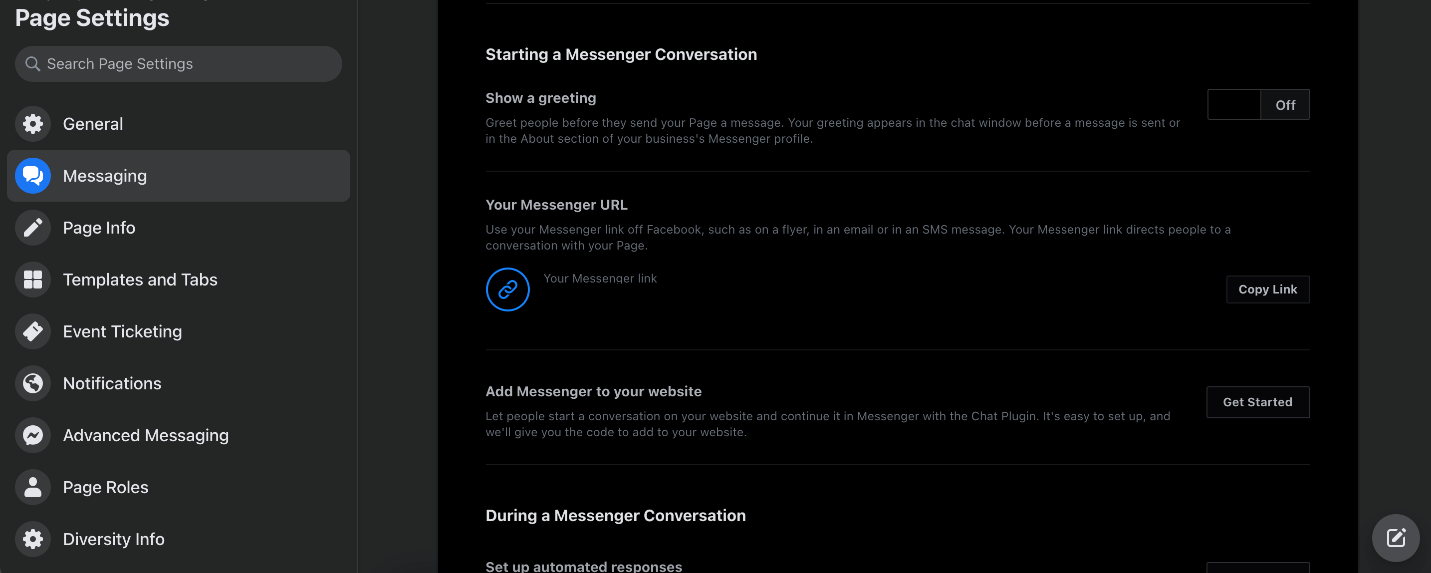
2. After that, go to Page Settings.

3. From there, click on Messaging.

4. Under Add Messenger to your website, click Get Started.

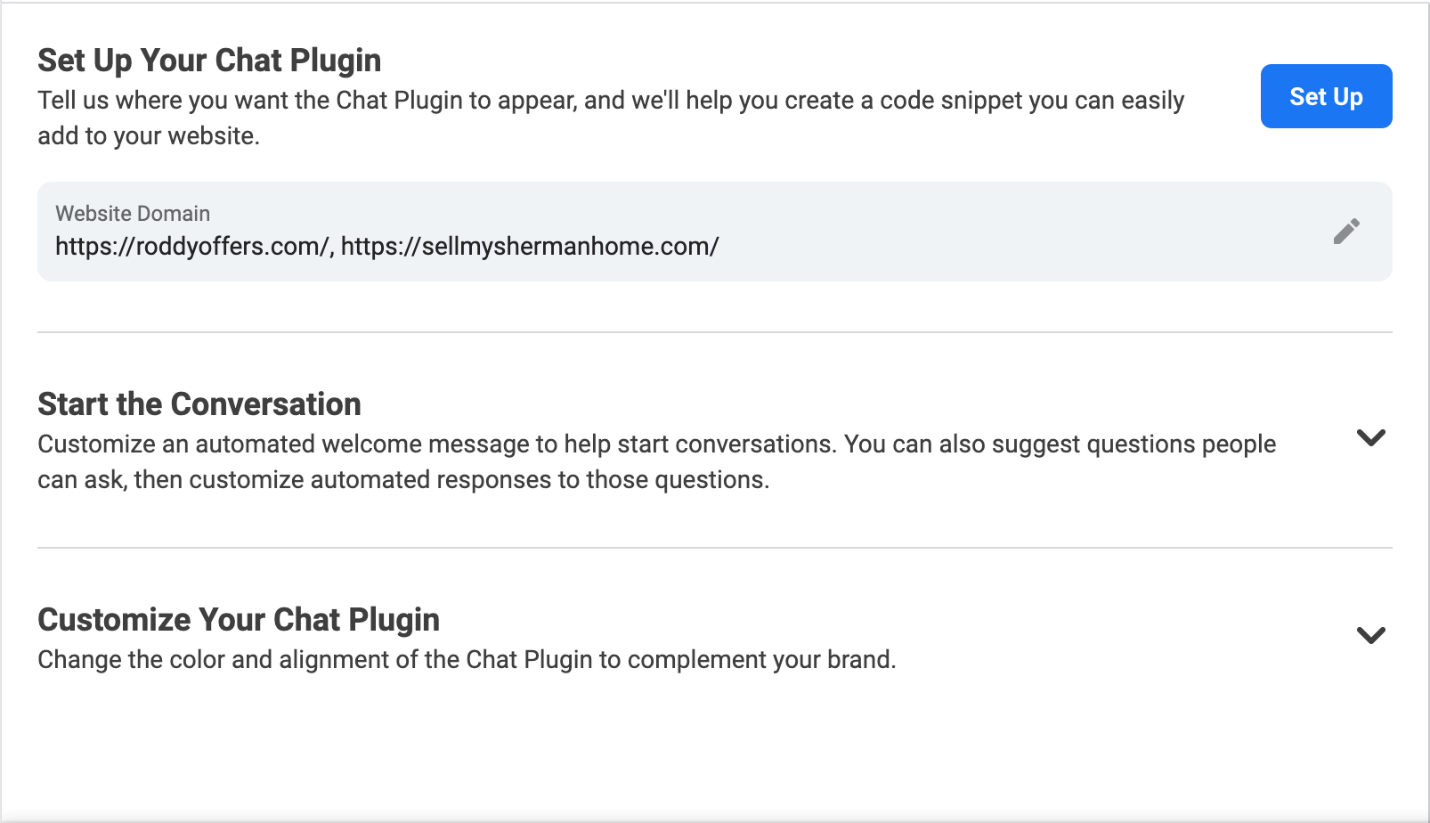
5. In the Set Up Your Chat Plugin section, click on Set Up.

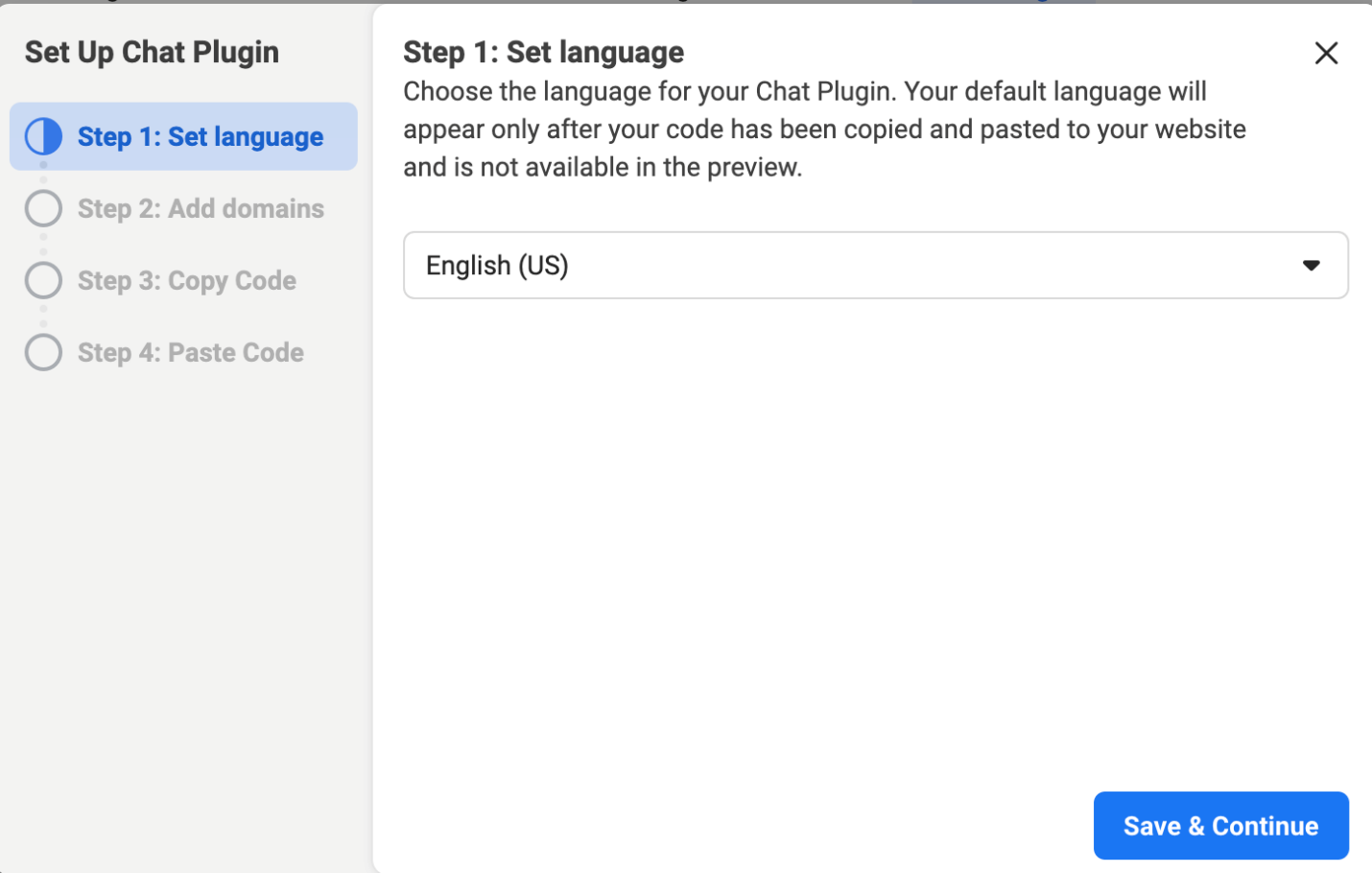
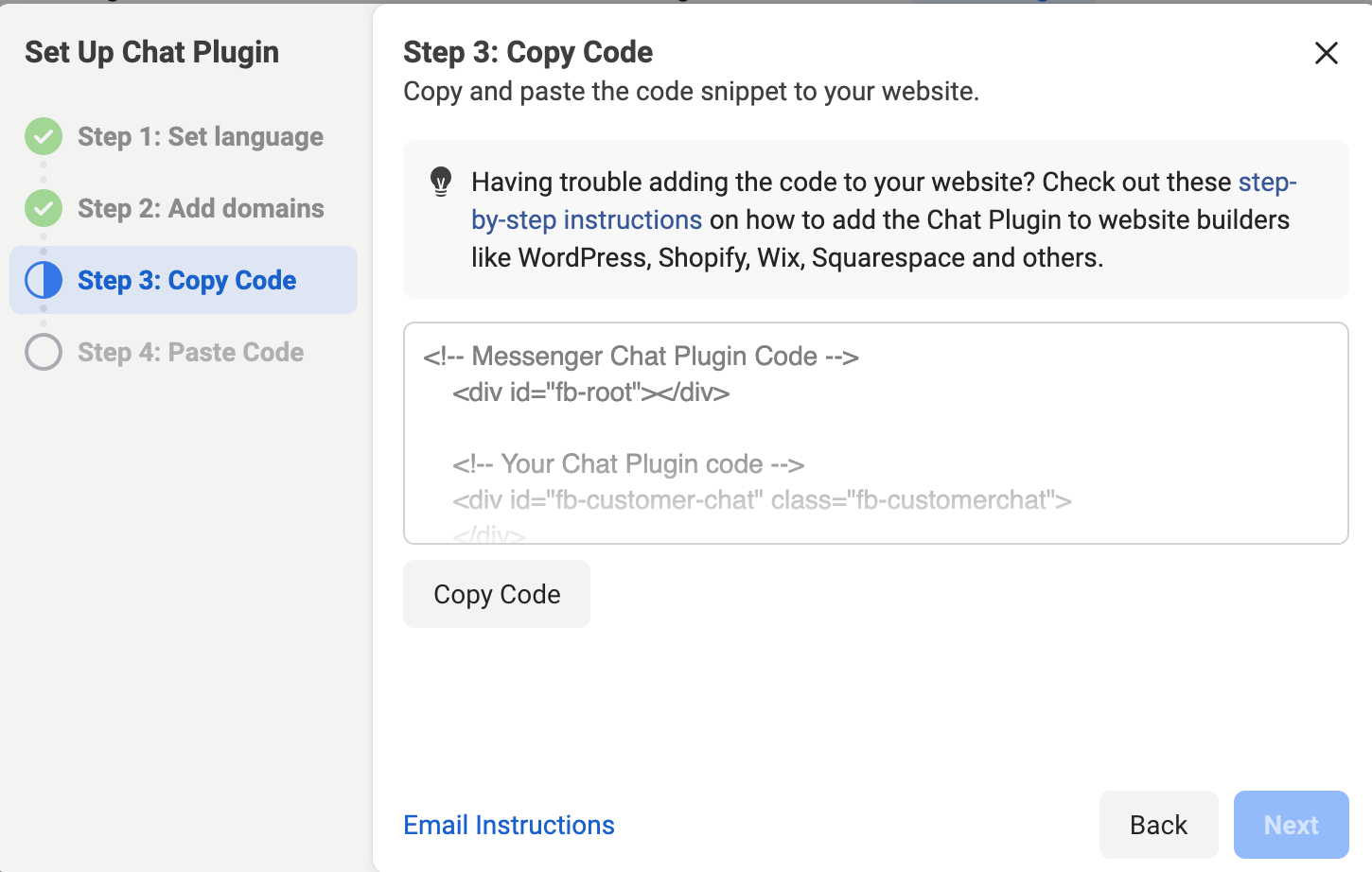
6. Follow the onscreen steps to set up the chat plugin and generate the code. After that, click the Copy Code button.

7. Sign in to your LeadPropeller account.

8. Click on your website and then click Edit Your Website. From there, click the Edit Website button.

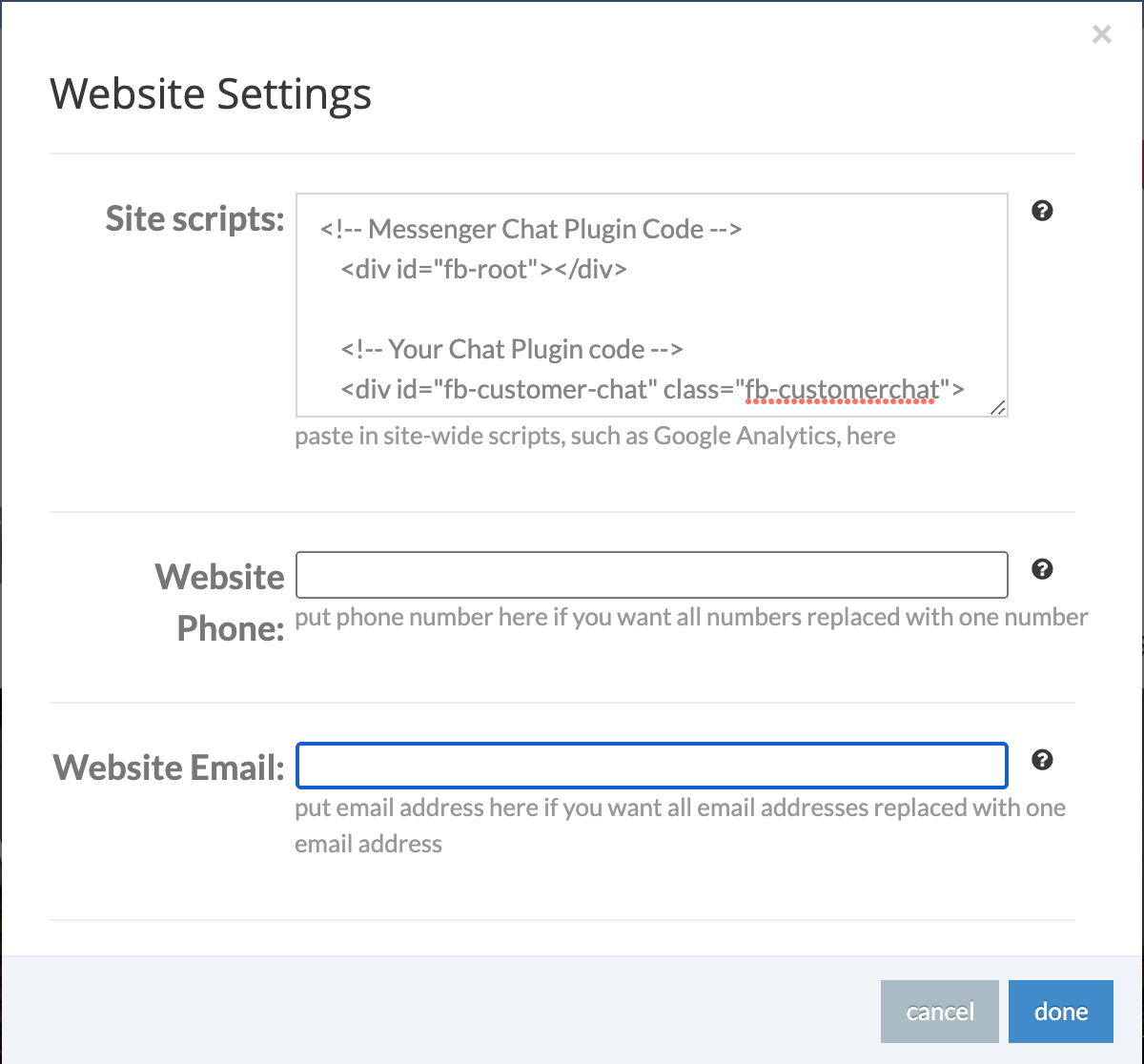
9. Click on the Gear Icon and then click Website Settings.

10. In the Site Scripts box, paste the Messenger chat plugin code below any site scripts already in the box.

11. Click Done.

12. Save (top right) your site changes and click Done.

13. Now that you’re back in the dashboard, click Publish Website Changes.

14. Once changes are published, tap on Click to View Your Site.

15. The Facebook Messenger chat plugin is now installed on your LeadPropeller website. If the Messenger icon doesn’t appear on your site right away (look at the bottom-right side of your browser window), perform a hard refresh with Ctrl+Shift+R (Windows) or Cmd+Shift+R (Mac).

Congratulations! You just made it even easier for motivated sellers to connect with you and have another HUGE advantage over other investors in your market.

Need a hand getting this awesome new feature live on your site? No problem! Reach out to the LeadPropeller team and let us know how we can help.

15 Essential Questions You Should Be Asking Sellers

Here are 15 questions that I feel are essential to ask sellers when they contact you about selling their house. These are the questions that I ask each and every time I talk to a seller.

When I ask these questions, I am not just trying to find out the details of the house and how much they want, I am trying to find out how motivated they are and how willing they are to sell the house at a price that would make it worth it for me to buy.

We don’t want to ‘hard sell’ people and don’t want to come off as someone just reading down a list of questions. It’s best to try and make this as conversational as possible. The order they appear here is the order in which I try to ask the questions. The meat is at the end of the conversation. You don’t have to ask them in this order.

Key points to remember: Ask open-ended questions. Listen. Listen. Listen. Let them do the majority of the talking.

  1. Who am I speaking with?We need to know who we are speaking to. I like to call them by their name throughout the conversation to help build rapport. Usually, I will tell them my name and then ask theirs if they don’t just come out and tell me at the beginning of the conversation.
  2. What is the address of the house you want to sell?This one is pretty important. It’s hard to analyze a deal when we don’t know the address. On rare occasions sellers will be hesitant and some will refuse to give you the address. I’ve never understood it, but it doesn’t matter because they are obviously not serious enough about selling their house. If I’m at my desk when I get the call, I will start pulling up the information for the property from the county appraisal district’s website (to find yours, just Google ‘[your county or area] appraisal district’. They usually are something like ‘bcad.org’.) This way I can pull up other information that a lot of owners don’t know off the top of their head and you don’t want to waste time asking them. I find the square footage, year built, the lot size, neighborhood, etc.
  3. How many bedrooms, bathrooms does it have?Should be straight forward. Try to make sure when they tell you 3 bathrooms, that it is not really 2.5 or that a 5th bedroom is not a garage conversion or something.
  4. Does it have a garage, basement, or pool?Ask about conversions, finished basements (don’t have many of those in south Texas), inground or above ground pools (I really dislike investment properties with pools).
  5. If you were going to list it with a Realtor, what repairs and/or updating would you say would be needed?This is a great way to find out what the house needs in the way of repairs, but also what it needs to make it desirable. Many times if you just ask the seller what repairs it needs, they will just think of things that are broken or some way damaged. They tend to not think about the fact that the house is terribly outdated. You want them to realize that the house may be in good shape, but may require a lot of updating and polishing.
  6. Why are you selling the house?Here’s a big one. This one requires some time and a great deal of open-ended questions and keeping your mouth shut so that they can talk. This is where the motivation usually becomes apparent. Sometimes the seller will be hesitant and only tell you they are moving. Don’t leave it at that. Ask them why they are moving?
  7. How much is owed on the house?Some people are afraid to ask this question for fear the seller will not appreciate it. In their mind, it is like asking what hand they are holding at the poker table. That’s not it at all really. I just want to know if they owe too much for me to be able to buy the house. I don’t want to waste my time going to meet with them if there is no way I would be able to buy the house for what I would need to buy it for. The way to approach this question, is to just ask it like you did the question about how many bedrooms the house has. Don’t make a big deal out of it and they won’t. It’s rare that someone doesn’t tell me how much is owed. If they don’t, they are not likely motivated enough anyway.
  8. Is the house behind on payments?Notice the wording of this one. We’re not asking, “Are you behind on the payments?” That would be sort of like rubbing their faces in it. This approach is a lot easier for people to be comfortable with telling you. Of course, it also goes along the same lines as asking how much is owed and should be treated the same way.
  9. Do you have an asking price in mind?Is their asking price in line with where you likely need to buy it? The vast majority of the time it will NOT be. So don’t worry about it. The asking price is just the price they are hoping to get for it. Most of the houses we buy, the seller asked a much higher price but knew they would never get it. I look at what is owed more than what they are asking. Now, if they spend an hour telling you about how nice the place is and that it is the biggest, nicest house in the neighborhood and are selling it because they want to buy a bigger, nicer house, you probably don’t want to waste much time with them.
  10. What did you base that on?How did they come up with that price? Did a Realtor pull comps for them? Did they see a house down the street for sale at that price? Is it because they are hoping to have X dollars to do Y? This can help determine more of their motivation for selling.
  11. How soon were you wanting to have it sold and closed?Another motivation building question. If they want to be done with it yesterday they will think about that while answering this question and will let you know that really just want it off their hands. When people tell me they just want to be done with the f&^#&* thing, I head over to see it as soon as possible.
  12. If I come out and look at the property and make you a cash offer to buy it ‘As-Is’ and close as soon as you want, what would be the least you would be willing to take?Here’s Ron LeGrand’s ultimate question. This is a must-ask question. It never ceases to amaze me how many people quickly and drastically reduce their asking price with this simple question. Here again, you want to play the quiet game while they are thinking about it. You don’t want to feel uncomfortable about the silence and make a comment to allow them to avoid answering it. This one is too important as it does the negotiating for you.
  13. When can I come by to take a look at the house?If they are somewhat motivated and/or at least have enough equity to be able to sell you the house for what you need to buy at, schedule an appointment with them. Sometimes I get lazy and tell them that I will research it and call them back to set up an appointment. That’s ridiculous and I know it. When I do that, sellers probably don’t feel like waiting around for me and continue calling other investors. Not a good thing. Make sure you schedule an appointment to see the house. In my opinion, most sellers will only talk with 1-3 house buyers when calling investors to buy their house. You need to be the one or one of the three.
  14. How did you hear about me?We’ve got to know what marketing is working so that you can focus on the marketing that is pulling better. Keep track of this.
  15. What is the best way to contact you?I hope you don’t forget this one. You really need to know how to contact the seller again. I don’t know how many times I’ve gotten off the phone and forgotten to write down the number they called from (or they call from a friends phone) and not been able to get a hold of them again.

So there are the 15 most important questions that we should be asking sellers when they call us. Thanks for reading.

-Danny Johnson

57 Motivated Seller Marketing Ideas

The purpose of this post is to try to think up as many marketing methods to find motivated sellers to find more houses to flip. My marketing has slacked up a little and I wanted to consider some different marketing.

So here goes:

  1. Bandit Signs
  2. Real Estate Investor Website
  3. Flyers
  4. Door Hangers
  5. Postcards
  6. Dollar Cards
  7. Business Cards
  8. Code Compliance List
  9. Pre-Foreclosure List
  10. MLS REO’s
  11. REO Realtors
  12. MLS Fixer Uppers
  13. Evictions
  14. Driving for Dollars
  15. Car Door Magnets
  16. Business Card Magnets
  17. Business Card Stickers
  18. Large Local Newspaper Ad
  19. Pennysaver/Thrifty Nickel Ads
  20. Local Specific Paper Ads (military etc.)
  21. Billboards
  22. Television Commercial
  23. Radio Commercial
  24. Social Networking
  25. Old School Networking
  26. Local Real Estate Investor Associations
  27. Wholesalers
  28. We Buy Houses Apparel
  29. Webinars
  30. Brochures
  31. Blog
  32. Direct Mail
  33. For Sale By Owner
  34. Calling For Rent Ads
  35. Expired MLS Listings
  36. Tax Sales
  37. Probates
  38. Probate Attorneys
  39. Mortgage Brokers
  40. Bird Dogs
  41. Banners
  42. Yellow Pages
  43. Coupon Books
  44. SWAG
  45. Skywriting
  46. Sponsorship
  47. Public Transit Ads
  48. Bulletin Boards
  49. Divorces
  50. Courthouse Steps
  51. Delinquent Taxes
  52. Payday Loan Stores
  53. Pawn Shops
  54. Fire Damaged Properties
  55. HOA’s
  56. Realtor Referrals
  57. Mail Carriers

Some of these will obviously be easier to do than others and some will be more expensive but require less work.

I tend to prefer the less work marketing methods. The other factor to look at is level of competition. Foreclosures have A LOT of competition while targeting fire damaged properties has very little.

The main thing to remember is that each of these things can work if given the chance to. Don’t just send out 50 letters and then give up because you didn’t get any calls. THIS IS A NUMBERS GAME. PERIOD. Put in the work consistently and you will be rewarded.

Build a Real Estate Portfolio Fast: Here’s How

Every real estate investor is trying to build a real estate portfolio fast. There are lots of strategies to build your portfolio, but which one will work the best for your business? The biggest thing to understand is that there are two ways to go about building a strong real estate portfolio: the slow way and the fast way.

Ready? Let’s get started!

5 Ways to Answer Customer Questions Before They Ask

There’s nothing more frustrating than getting asked a question by a customer that you’ve already answered. There’s also nothing more embarrassing than realizing you don’t have these answers available for them. We briefly went over this when we talked about how to make your real estate investing website more credible, but let’s go over it more in depth.

Why is it so important to answer customer questions early on? There are a few reasons:

  1. It makes you more credible
  2. It makes them feel self-sufficient
  3. It frees up time from you needing to answer the same question over and over

There are lots of different strategies to connect with your target audience through content and community management. In this article we’re going to go over the top 5 ways to answer customer questions before they ask! Let’s get started.

Knowing the Real Estate Market Cycle

Knowing the real estate market cycle will keep your business ahead of the competition. Which cycle are we in? Which cycle is coming? We’re going to go over what the warning signs are and what the best steps to take for your real estate investing business are. Real estate investing cycles are exactly that, a cycle. If you’re in a market that’s experiencing some issues, don’t worry, it will turn around eventually. If you’re in a market that’s booming, you should be investing in properties that will build a safety net for your business when the cycle eventually turns.

Before we get to talking about the real estate market cycle, let’s talk about the most important part to running any kind of business: marketing. If you’re not marketing your real estate investing business then there’s no way you’re going to get leads. You’re in luck! We host a weekly webinar that goes over the best way to generate high quality leads for your real estate investing business. Our years of experience are free for you to learn, all you have to do is click that blue button below to reserve your seat. Pssst, did we mention it was free? Check it out!

Why More Investors are Renting (and why you should too)

Knowing what to do with investment properties is half the battle of running a successful real estate investing business. Don’t worry, you read the title right. More and more investors are keeping their properties to rent instead of flipping and selling. But why? We’re going to show you why this trend is happening and why you should start building your rental portfolio.

First, every real estate investor knows that finding leads doesn’t come easy. If you’re not marketing your real estate investing business then you’re not making money. The best leads are online, that’s just a given. Come master online lead generation with our free weekly webinars! Did we mention they’re free? Click the button below to reserve your seat today 🙂